
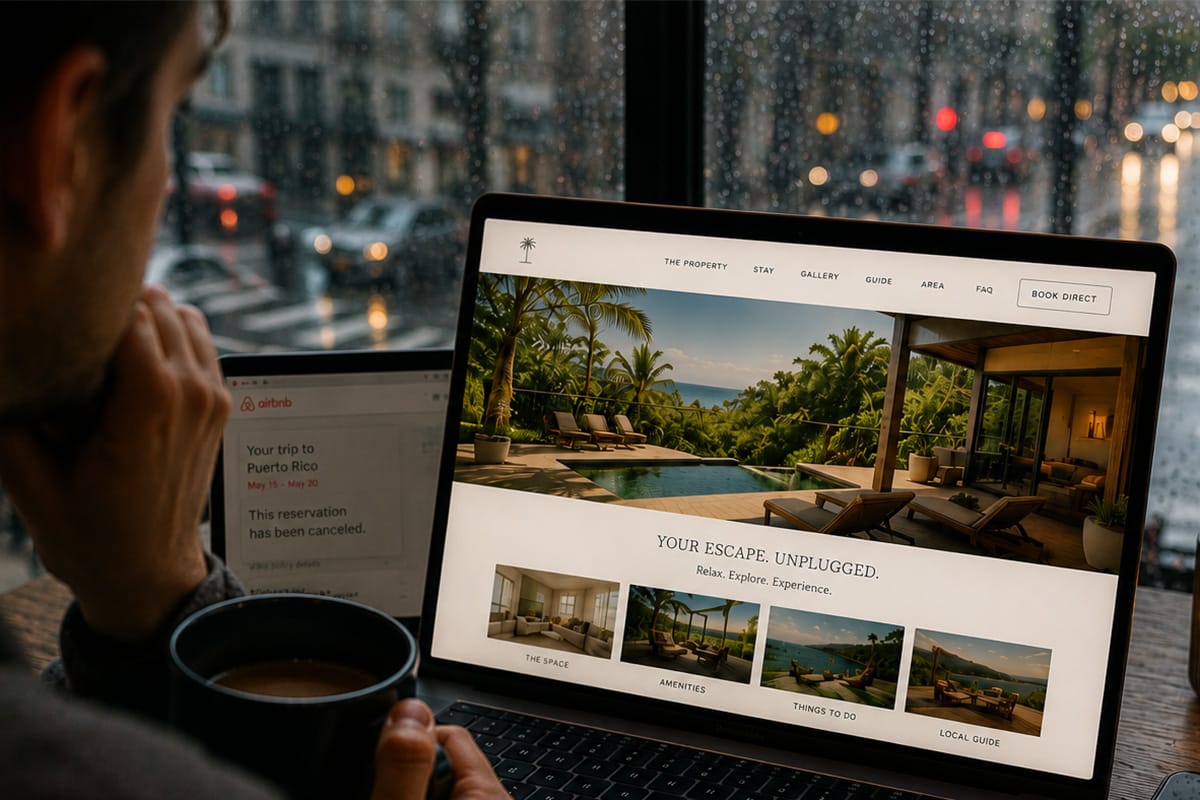
The Hidden Reason Some Airbnb Guests Cancel So Easily
Every Airbnb host expects cancellations once in a while.
That’s part of the business.
Flights change.
Plans shift.
People get sick.
Travel becomes uncertain.
But recently, something stood out to us.
Not just the cancellations themselves — but how quickly guests seemed willing to let the entire trip go.
And it raised a bigger question:
How emotionally connected are guests to the stay itself after they book?
Because in many cases, the booking is technically confirmed…
but psychologically, the trip still feels fragile.
The Booking Isn’t the End of the Decision
This is something many hosts underestimate.
A guest books.
The calendar blocks.
And it feels like the decision is complete.
But in reality, guests continue evaluating the trip long after the reservation is made.
Especially during the period between booking and arrival.
That window matters far more than most hosts realize.
Airbnb Creates a Transaction. Not Always Attachment.
Airbnb is incredibly good at generating bookings.
But the platform environment also creates a certain kind of psychology.
Guests are constantly surrounded by:
- competing listings
- pricing comparisons
- alternative options
- notifications
- new recommendations
Which means the stay itself can remain surprisingly replaceable.
Especially after the booking is made.
And when uncertainty appears — even small uncertainty — guests often start reassessing the stay itself.
Not necessarily because something is wrong.
But because the emotional connection to the property may still be relatively weak.
The reservation exists.
But the stay may not yet feel fully anchored in the guest’s mind.
That’s an important difference.
This Is Where Many Stays Start Feeling Disposable
If the only connection a guest has to a stay is:
- an Airbnb reservation
- a few platform messages
- and a listing they may barely remember
then emotionally, the booking can remain surprisingly weak.
The stay never fully becomes “real.”
And when plans become complicated, canceling feels easy.
Not because the property is bad.
Not because the host did anything wrong.
But because there was never a deeper sense of connection built after the booking happened.
The Stay Starts Before Arrival
What Guests Return To Matters
This is where websites become much more important than many hosts realize.
Not because guests necessarily book directly.
And not because a website magically prevents cancellations.
But because a good website changes the psychological relationship with the stay itself.
It gives guests:
- a place to return to
- familiarity
- reassurance
- visual continuity
- a stronger sense of place
Most importantly:
It allows the stay to exist outside the Airbnb marketplace.
That changes perception.
The Booking Often Stops Feeling Real
This is something we’ve started noticing more and more.
After guests book on Airbnb, the connection to the stay itself often fades surprisingly fast.
The reservation exists.
But the property can still feel interchangeable.
Especially weeks before arrival.
Guests remember:
- the area
- a few photos
- maybe the price
But not always why they chose that specific stay in the first place.
And when uncertainty appears, that matters.
Because guests usually don’t go back and carefully compare amenities again.
They make a fast emotional decision.
And stays that never became emotionally anchored are often easier to cancel — or replace.
What Changes This
One of the simplest things hosts can do is surprisingly overlooked:
After the booking is confirmed — when Airbnb finally allows links inside messages — send guests the website.
Not as a sales tool.
Not to push direct bookings.
But to move the guest mentally outside the Airbnb marketplace.
Sometimes it can be as simple as:
“Thanks again for your booking — love that you’re celebrating your anniversary here.
For some inspiration of what’s ahead, here’s the website with more photos and information about the stay.”
That small shift changes the environment completely.
Guests are no longer returning to:
- competing listings
- pricing comparisons
- endless alternatives
They’re returning to the stay itself.
They revisit the photos.
They share the link with family or friends.
They reconnect with the feeling of the property before arrival.
The stay starts becoming more familiar.
More concrete.
Less interchangeable.
That doesn’t eliminate cancellations.
But it changes how emotionally replaceable the stay feels when uncertainty appears.
A Website Changes More Than Marketing
Most hosts think of a website as:
- SEO
- direct bookings
- information
- branding
And yes, it can help with all of those things.
But one of the most overlooked benefits is much simpler:
A website strengthens guest confidence.
Especially during moments of uncertainty.
And for many hosts, if sharing the website with booked guests prevents even a small number of cancellations over time, the website may have already paid for itself long before a direct booking ever happens.
Final Thought
Many hosts think cancellations are purely operational.
Sometimes they are.
But sometimes cancellations reveal something deeper:
How much trust and emotional connection existed after the booking was made.
And that layer matters far more than most hosts realize.
If you’re an Airbnb host, it may be worth asking a simple question:
What do guests reconnect with after they book?
Because that period between booking and arrival often shapes far more than most hosts realize.